
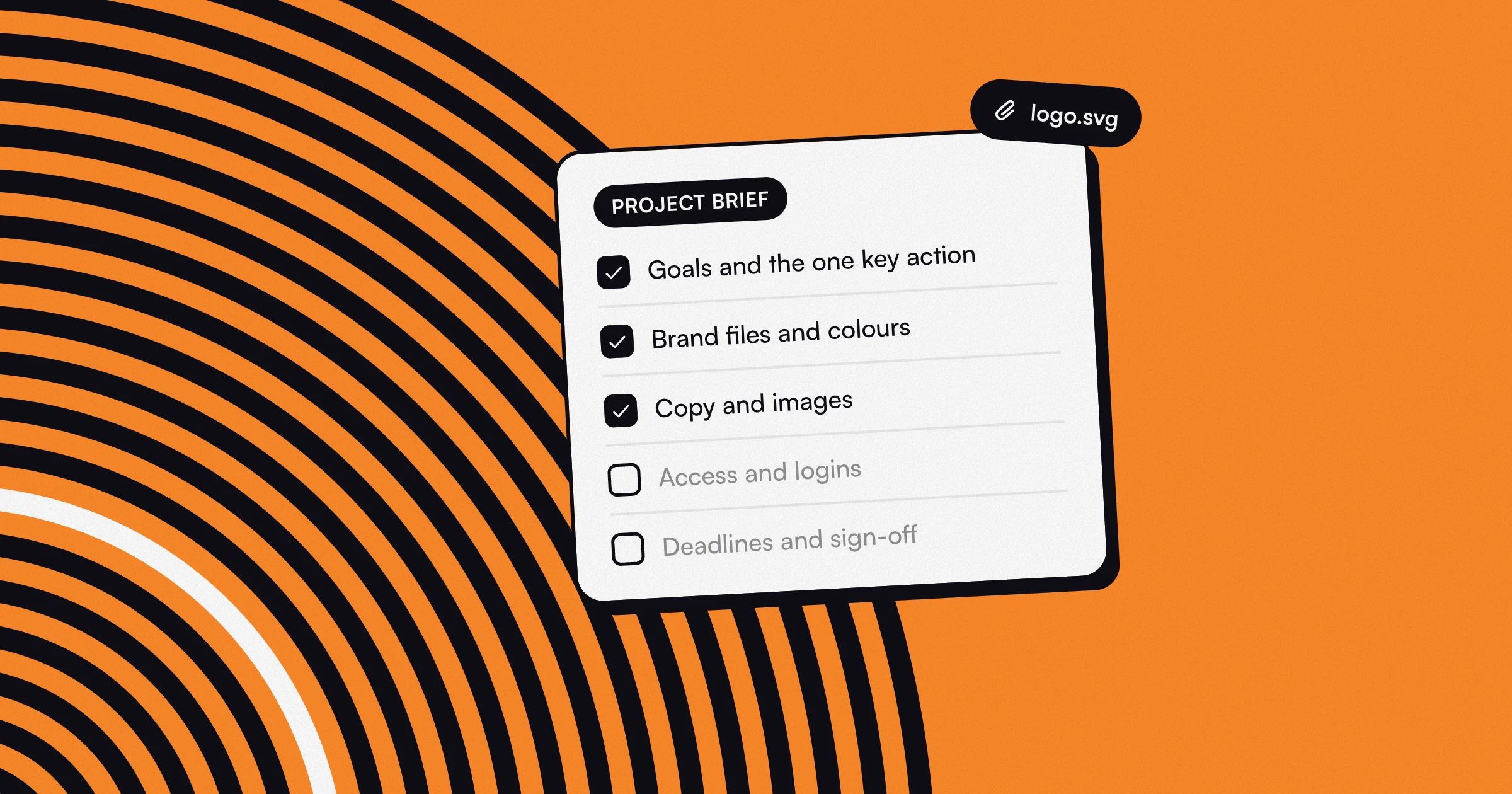
The website projects that move fastest have one thing in common. The client sends most of what we need before work starts. Nothing slows a project like waiting on a logo file, a login or a decision. This checklist covers what to gather, and why each item saves time once we begin.
How the brief fits our process
Every project we run follows four steps:
- Book a call. We talk through your goals, audience and timeline, and suggest an approach.
- Share your brief. You send us the material in this checklist.
- Create and execute. We design the key pages first, then build in Webflow or Framer, with a review at each step and quality checks before launch.
- Receive your delivery. We hand the site over with a walkthrough, so your team can run it.
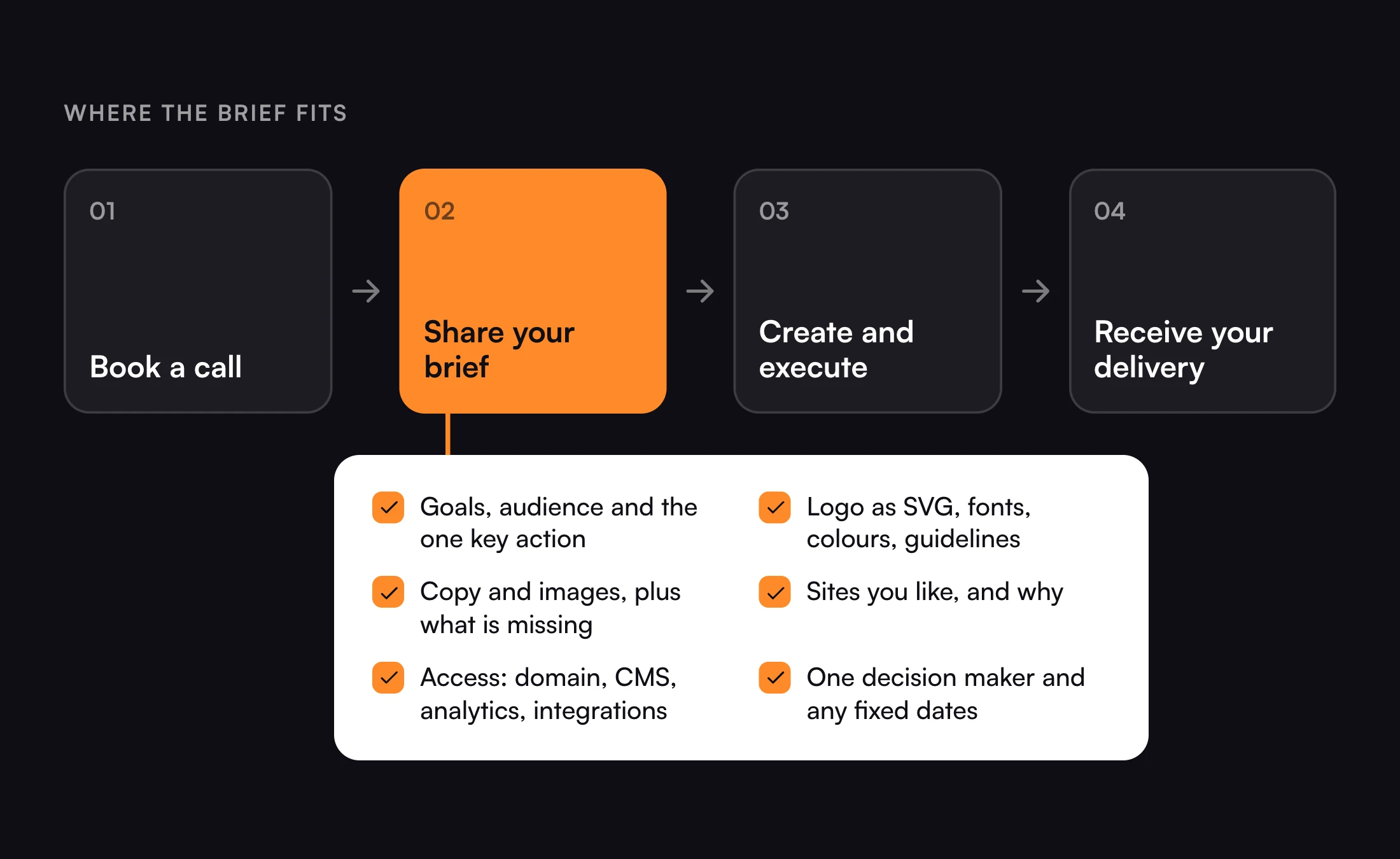
This article is about step two. The better the brief, the faster step three moves, because we spend our time designing and building instead of chasing files and answers.
Goals, audience and the one action that matters
Tell us what the site is for. More demo requests, more trial sign-ups, more qualified leads, more job applicants? Then pick the one action that matters most.
That single action shapes the whole site: the page structure, where the buttons go and what the home page leads with. A site that tries to drive five actions equally tends to drive none of them well. When we know the main goal, we can make design decisions quickly instead of debating them in every review.
Then tell us who you are trying to reach. A technical buyer, a founder, a head of marketing, an enterprise procurement team? What do they need to believe before they take that action?
A short paragraph is enough. It saves us guessing, and it saves you the feedback rounds that come from a design written for the wrong reader.
Brand files, copy and images
Send everything you have, even if it feels unfinished:
- Logo as SVG. A vector file stays sharp at every size. A PNG pulled from an old site or a screenshot usually has to be redone.
- Fonts. The font names, plus the files or licences if they are not free web fonts.
- Colours. The exact values, ideally as hex codes.
- Brand guidelines. Any PDF, Figma file or slide deck that shows how the brand is used.
If you do not have guidelines yet, say so. That is useful too, because it tells us to define a few simple rules as part of the design.
Content is the most common reason projects stall. Design without real copy is guesswork, and layouts often change once the real text arrives. Send what you have: page copy, product screenshots, team photos and customer logos you have permission to use.
Just as useful is a clear list of what is missing. If the pricing page copy is not written yet, or you need product visuals made, we can plan around it from the start instead of finding the gap halfway through.
Sites you like, and why
Send a few sites you like, and for each one, write a line about what you like. The typography? The way it explains the product? The scroll animations? The calm, spacious layout?
A link on its own tells us very little. A note like “we like how this page explains pricing in three simple steps” tells us a lot. These notes turn taste into direction, so the first design lands much closer to what you have in mind.
It helps to share what you dislike as well. Knowing what to avoid narrows the options just as quickly.
Access to your accounts
Plenty of launch delays have nothing to do with design. They come from missing logins. Share access, or tell us who holds it, for:
- Domain registrar. Where your domain is managed, so we can connect the new site at launch.
- Current CMS or website platform. So we can export content and plan redirects from old URLs to new ones.
- Analytics. So tracking carries over and you keep your history.
- Forms and integrations. Your CRM, email tool, booking tool or any other service the site sends data to.
Where you can, invite us as a user or team member rather than sending passwords by email. It is safer, and you can remove access after the handover.
Who decides, and by when
Tell us who signs off. A single decision maker keeps things moving, even when several people give input.
Tell us how you prefer to give feedback, too: comments on the design file, a shared document, a short call or a recorded video walkthrough. Consolidated feedback in one place beats scattered notes from five people across three channels, and it means each review ends with clear next steps.
Finally, tell us about any fixed dates at the start. A product launch, a conference, a funding announcement, a campaign going live. We plan the order of work around those dates, which might mean launching the key pages first and adding the rest after. A date we hear about halfway through is much harder to meet than one we plan for from day one.
Ready when you are
You do not need every item on this list before we talk. Many clients start with half of it, and we fill the gaps together on the first call. But the more you can send, the sooner we get to the part you care about: a site that does its job and that your team can run.
When you are ready, book a call and we will walk through your brief together.