

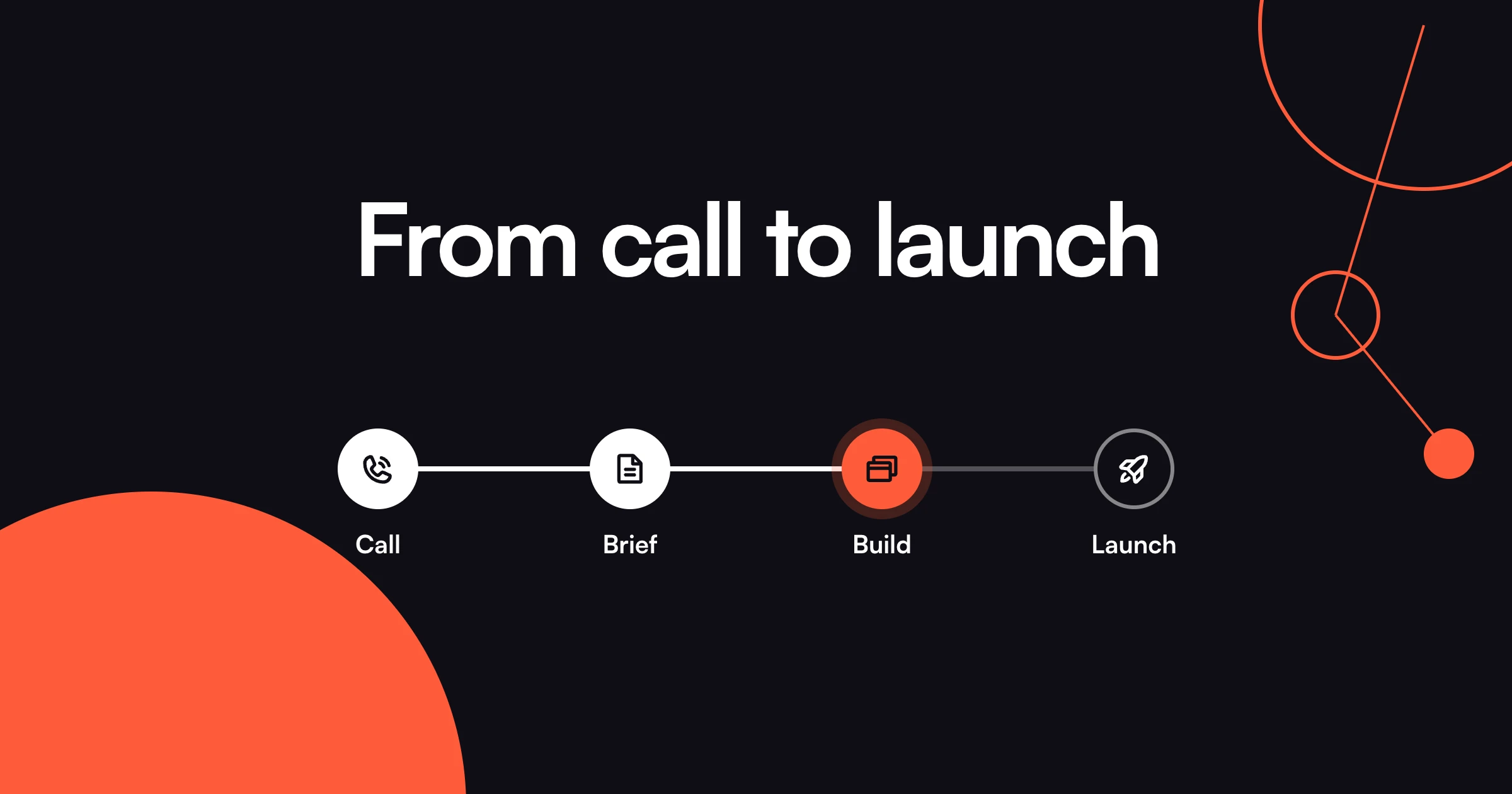
It is one of the first questions on almost every call: how long will this take? The honest answer is that it depends, but not in a vague way. A handful of specific things decide most website timelines, and many of them are as much in your hands as ours. Here is what they are, and what we do to keep a project moving.
Content readiness
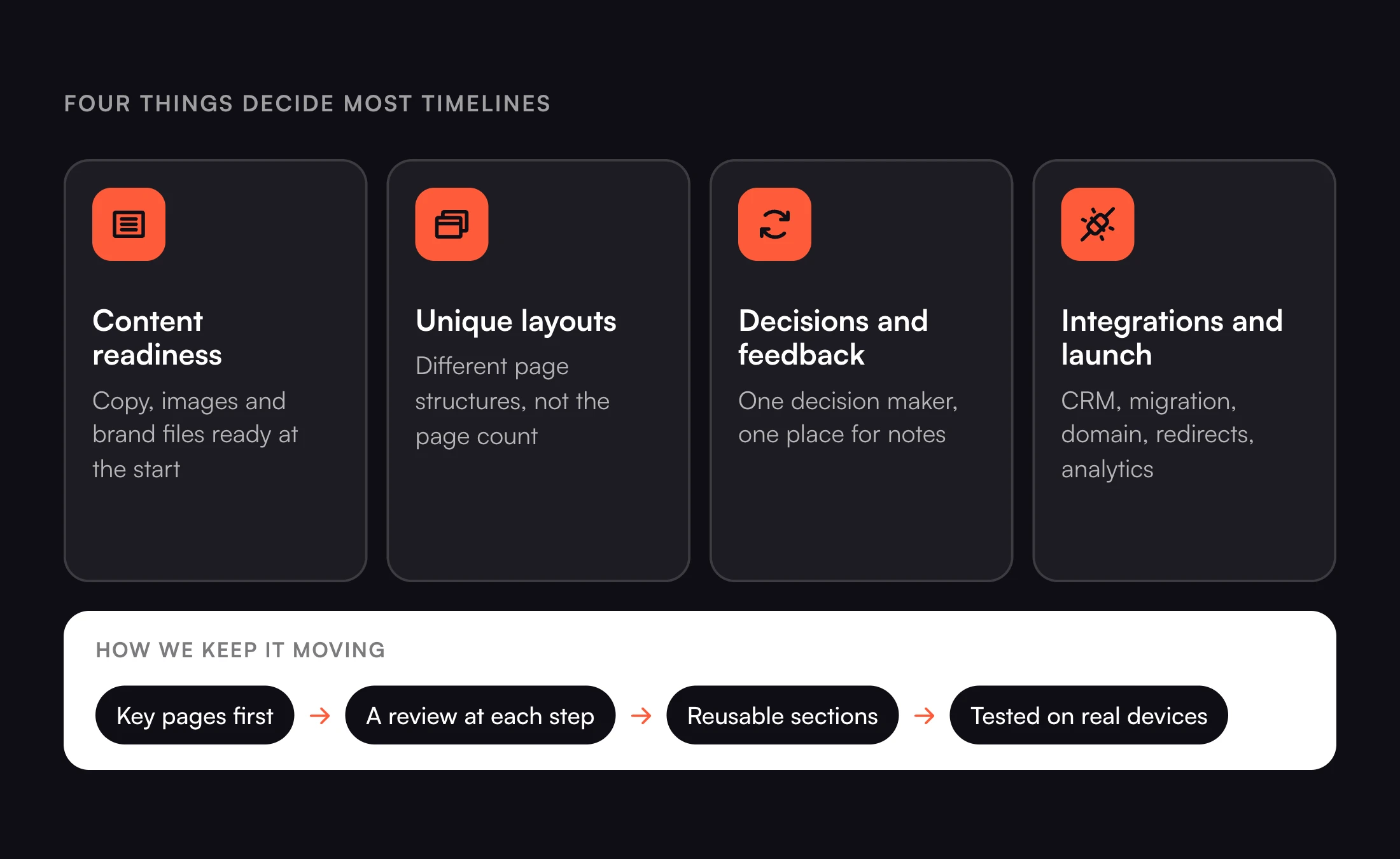
The biggest factor is content. When copy, images and brand files are ready at the start, design and build can run without pauses. When they are not, work waits.
Placeholder text also hides problems. A headline that fits on one line in a mockup may run to three once the real one arrives. A section designed for four features may need to hold seven. Real content early means fewer layout changes late, and fewer surprises in review.
If some content is not ready, that is normal. What matters is knowing which pieces are missing and who is writing them, so we can design around the gaps instead of stopping for them.
Unique layouts, not page count
Page count matters less than most people think. What matters is how many different layouts the site needs.
Twenty blog posts that share one template come together quickly once the template exists. Five pages that each need their own structure, sections and responsive behaviour take far more work. When we scope a project, we count unique layouts, not pages, because that is where the design and build effort goes.
This is also why a CMS helps. Case studies, job listings and blog posts built on shared templates can grow without adding much to the timeline.
Decisions, feedback and scope changes
Every review is a pause while we wait for your input. Fast, clear feedback keeps a project moving. Slow or conflicting feedback stops it.
The causes are familiar. The person who signs off is away. Several stakeholders give different notes. Feedback arrives in pieces over several days. Agreeing on one decision maker and one place for feedback at the start removes most of this.
New ideas during a project are normal, and often good. But each one has a cost. Adding a page, a new integration or a fresh take on a section that was already approved pushes back everything after it.
We handle this openly. When a request falls outside the agreed scope, we say so, explain how it affects the timeline, and you decide whether to add it now or after launch. Plenty of good ideas work better as a second phase.
Integrations, migrations and launch logistics
Connecting a site to other tools takes time that is easy to underestimate. Forms that feed a CRM, newsletter sign-ups, booking tools, gated content. Each one needs setup, testing and sometimes access from someone on your side.
Migrations add more. Moving a blog with years of posts from an old platform means exporting the content, cleaning it up, mapping it into the new CMS and checking that everything came across correctly.
Then there is launch itself, which often depends on people outside the project:
- Domain. Someone needs access to the registrar to point the domain at the new site.
- Redirects. Old URLs need to point to new ones, so you keep your search rankings and do not break links people have shared.
- Analytics. Tracking needs to be in place before launch, not after, so you do not lose data.
When the person who controls the domain is hard to reach, a finished site can sit waiting. Sorting out access early avoids that.
How we keep projects moving
We cannot control every factor, but we have shaped our process around the ones that slow projects most.
- Key pages first. We design the most important pages before anything else, so the direction is agreed early and the rest of the site follows it.
- A review at each step. Small, regular reviews catch problems while they are easy to fix, instead of one big review at the end.
- Reusable sections. We build from a set of reusable sections, so new pages come together quickly and stay consistent.
- Testing on real devices. We check the site on real phones and browsers before launch, so issues surface before your visitors find them.
It is the same process we have used across 400+ jobs, with 230+ five-star reviews from clients.
Ongoing work on a monthly plan
Some teams do not need one big project. They need a steady flow of new pages, landing pages and updates. For them we offer a monthly plan.
You send requests, and we work through them one at a time, in the order you set. Each request is delivered in 2 to 3 business days, and larger pieces are split into smaller steps. You can pause or cancel before your next billing date, and there is no long-term contract.
Getting a timeline for your project
We give you a timeline once we have seen your scope, content and deadlines, because that is when it can be accurate. The more you can share up front, the more reliable it will be.
To talk through your project and the dates that matter to you, book a call.